Aksoy Laboratory for Clinical & Translational AI
The lab develops clinical AI tools and studies what happens to them after publication: external validation, implementation in clinical settings, and governance once tools are in use.
It is based at the Centenary Institute’s Centre for Biomedical AI in Sydney, alongside the melanoma program at the Daffodil Centre, University of Sydney, and is led by clinician scientist Dr Yagiz Aksoy.
13 tools in 6 clinical fields. Each is drawn as an explanatory illustration.
Select a tool to open its illustration.
Pathology & oncologyStage: Validate
MTCx recurrence prognosticator
Predicts recurrence-free survival in medullary thyroid carcinoma. Peer-reviewed · externally validated · live calculators.
Four stages between a model and routine care
Many clinical prediction models are published and never used in patient care. The lab’s work is organised around the four stages a clinical AI tool passes through between development and routine use.
Illustrative: a schematic, not live data. A tool’s name appears only at a stage it has reached.
Build
Models developed from clinical data for a defined clinical decision.
Validate
Peer review and testing in external cohorts, with calibration and uncertainty reported.
Deploy
Use in clinical settings under defined clinical and data governance.
Govern
Monitoring and oversight of tools in routine use.
Where each tool stands
13 tools across 6 clinical fields. Each is placed at the furthest stage its public evidence supports, and its status label is kept, so preprints, prototypes, synthetic demonstrators and proposals are marked as such.
Build
Does the model address a defined clinical decision?
Validate
Does performance hold in new patients and settings?
Deploy
Can it be used safely in routine care?
Govern
Does it remain safe over time?
Pathology & oncologyStage: Validate
MTCx recurrence prognosticator
Peer-reviewed · externally validated · live calculators
AUC 0.94 · external AUC 0.90
n = 300 across five centres · external test n = 87
What it does
Predicts recurrence-free survival in medullary thyroid carcinoma, a rare thyroid cancer. Published in Histopathology (2024).
Where it stands
Available as online research calculators.
Calculator hosted by PanaceAI, a company founded by Dr Aksoy.
Of the lab’s thirteen tools, seven are in development, four are validated or published, one is in use and one works at the governance stage.
The list includes tools that have not been released for clinical use. The tools described are research instruments, not registered medical devices.
Case study: MTCx
MTCx predicts recurrence-free survival after surgery for medullary thyroid carcinoma, a rare thyroid cancer. The steps below follow it from the clinical question to external validation and release. Three of the eight steps draw on other projects: a model the lab held back, and the two stages MTCx has not reached.
“Clinical AI has four jobs, and most projects only do the first one.”
- Build
- Validate
- Deploy
- Govern
Free online calculator: panacea.shinyapps.io/MTCx
Build: the clinical question
After surgery for medullary thyroid carcinoma, which patients will see their cancer return?
The cancer is rare, so no single hospital sees enough patients to answer this reliably, and prognosis has relied largely on stage. Royal North Shore Hospital in Sydney contributed 58 patients to the study.
Build: the cohort
Three hundred patients from five centres in four countries
Patients were treated in Sydney, New York, Boston, Paris and Bologna. Tumours were graded with the International Medullary Thyroid Carcinoma Grading System, so pathology was comparable across centres.
Build: the model
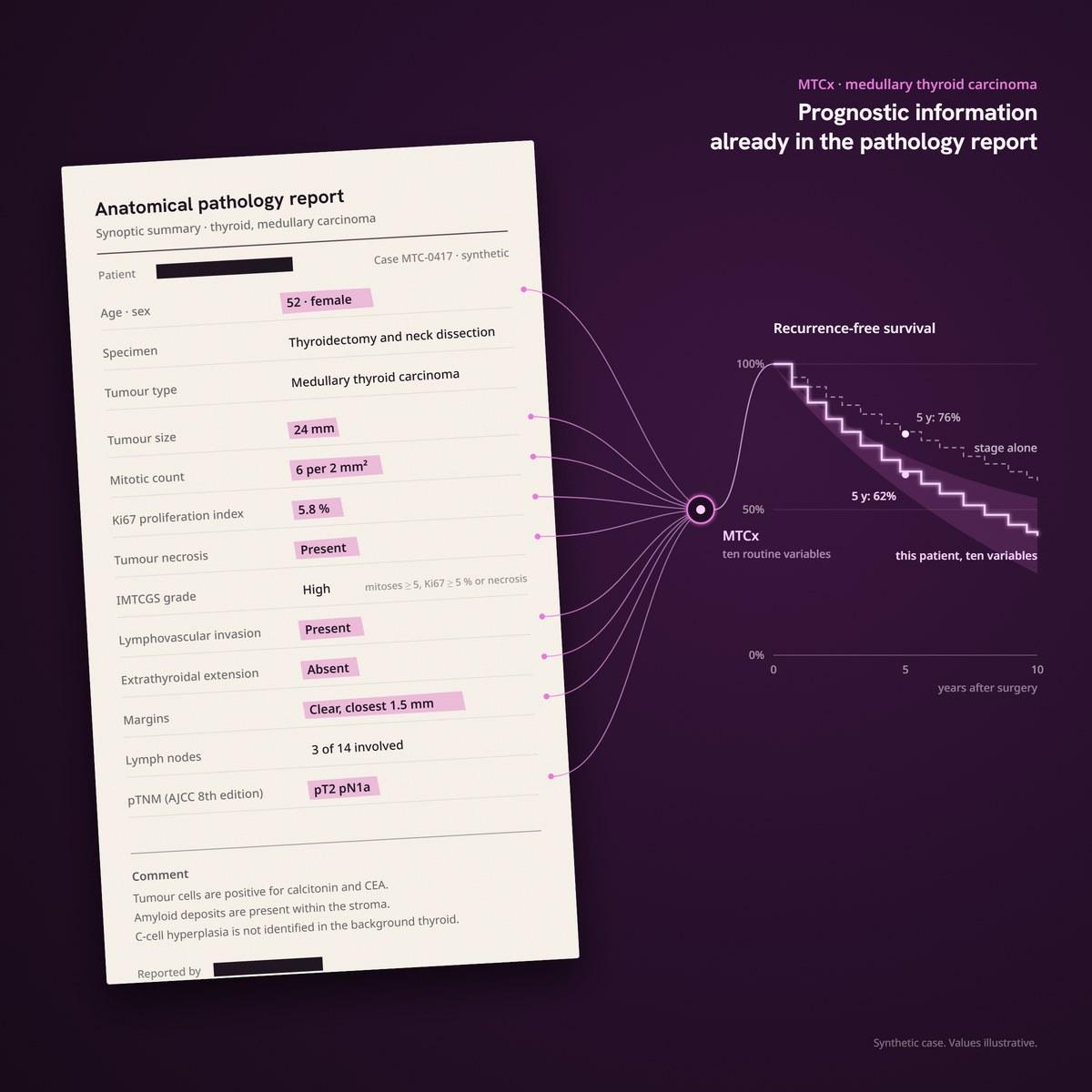
A model built from routine pathology and stage
The model combines mitotic count, Ki67, necrosis, lymphovascular invasion, extrathyroidal extension and margin status with age, sex, stage and tumour size. In the development cohort it reached an AUC of 0.94, with a C-index of 0.876.
Build: a model held back
A model the lab has not released
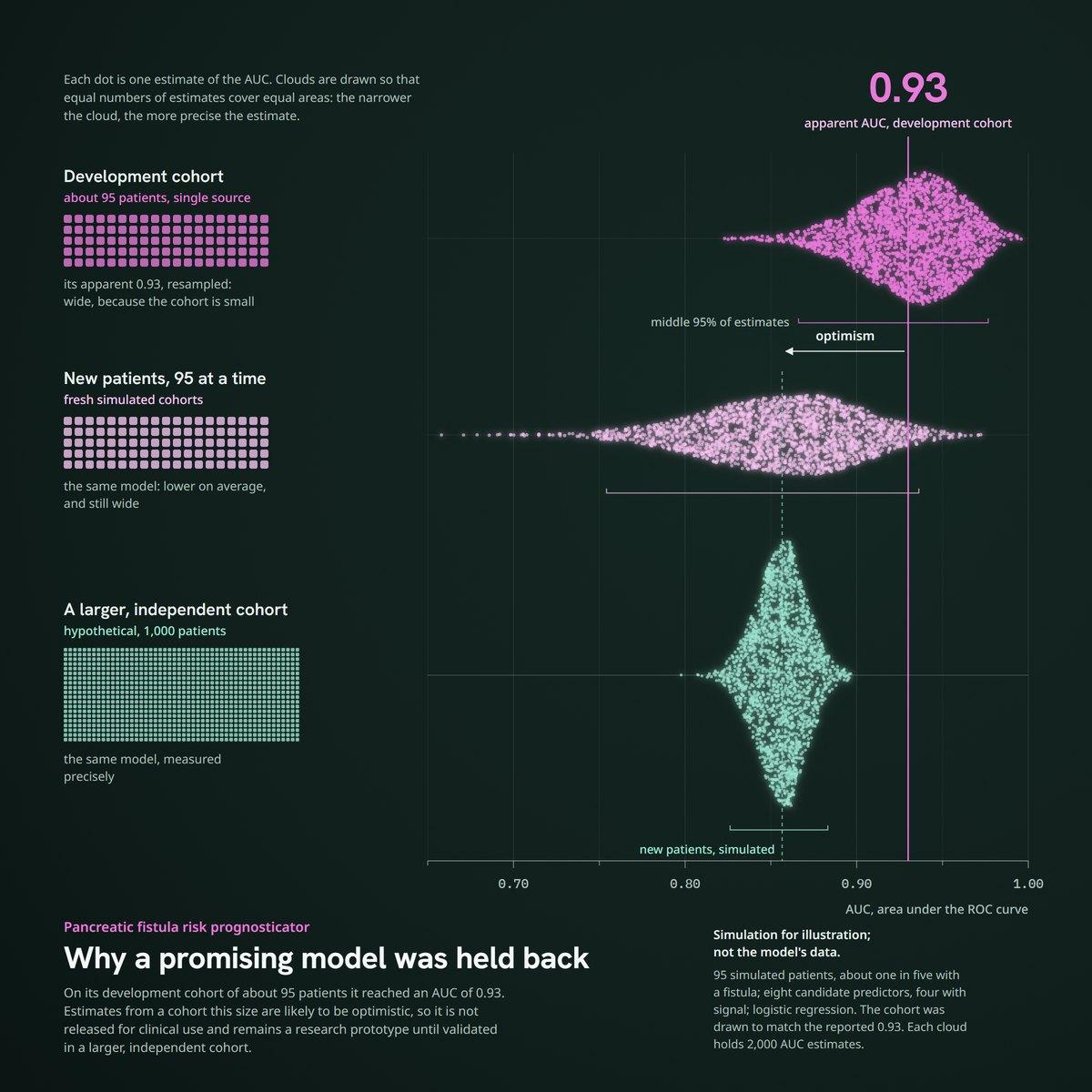
The lab’s pancreatic fistula model reached an AUC of 0.93 on its development cohort, close to MTCx on the same scale. That figure rests on about 95 patients from a single source, and estimates from a cohort of this size are likely to be optimistic.
The model has not been released for clinical use. It will remain a research prototype until it has been validated in a larger, independent cohort.
Validate: an independent cohort
Tested at a centre that took no part in building it
MTCx was then tested on an independent cohort of 87 patients at Emory University in Atlanta, where it reached an AUC of 0.90, against 0.94 in development.
External validation so far rests on this one independent centre.
Validate: release
Published open access, with a free calculator
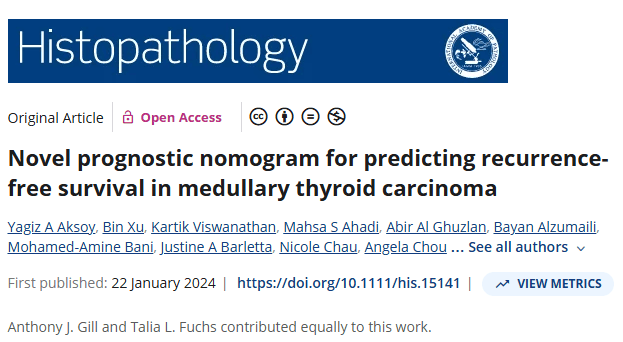
MTCx was published open access in Histopathology in 2024 and released as an online calculator that estimates recurrence-free survival for an individual patient from the same routine variables.
PolypRisk AI, the lab’s tool for malignant colorectal polyps, was released in the same way. In a 2026 letter to the ANZ Journal of Surgery, a surgeon at Cairns Hospital recommended it as an adjunct to guideline-based assessment and called for multicentre external validation, which is planned.
MTCx calculatorPolypRisk AI calculatorCairns Hospital letter
Calculators hosted by PanaceAI, a company founded by Dr Aksoy.
Deploy: in use
A platform developed for a health system
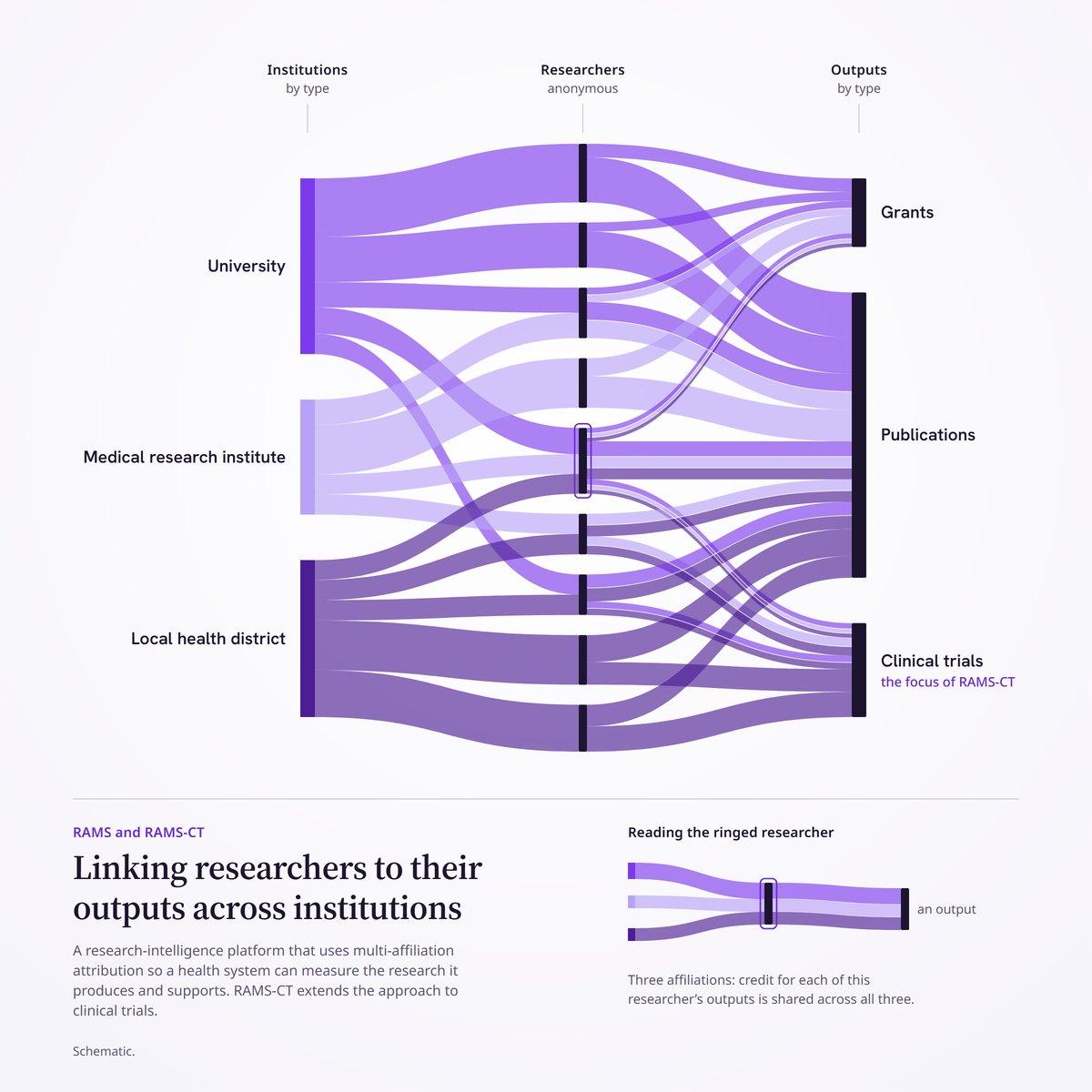
RAMS links researchers to their publications, grants and clinical trials across institutional boundaries, using a multi-affiliation attribution method, so that a health system can measure the research it produces and supports. It was developed in 2025–26 for NSW Health’s statewide research operations, and RAMS-CT extends the approach to clinical trials.
Source code, data and performance figures are not published.
Developed by PanaceAI, a company founded by Dr Aksoy.
Govern: ethics review
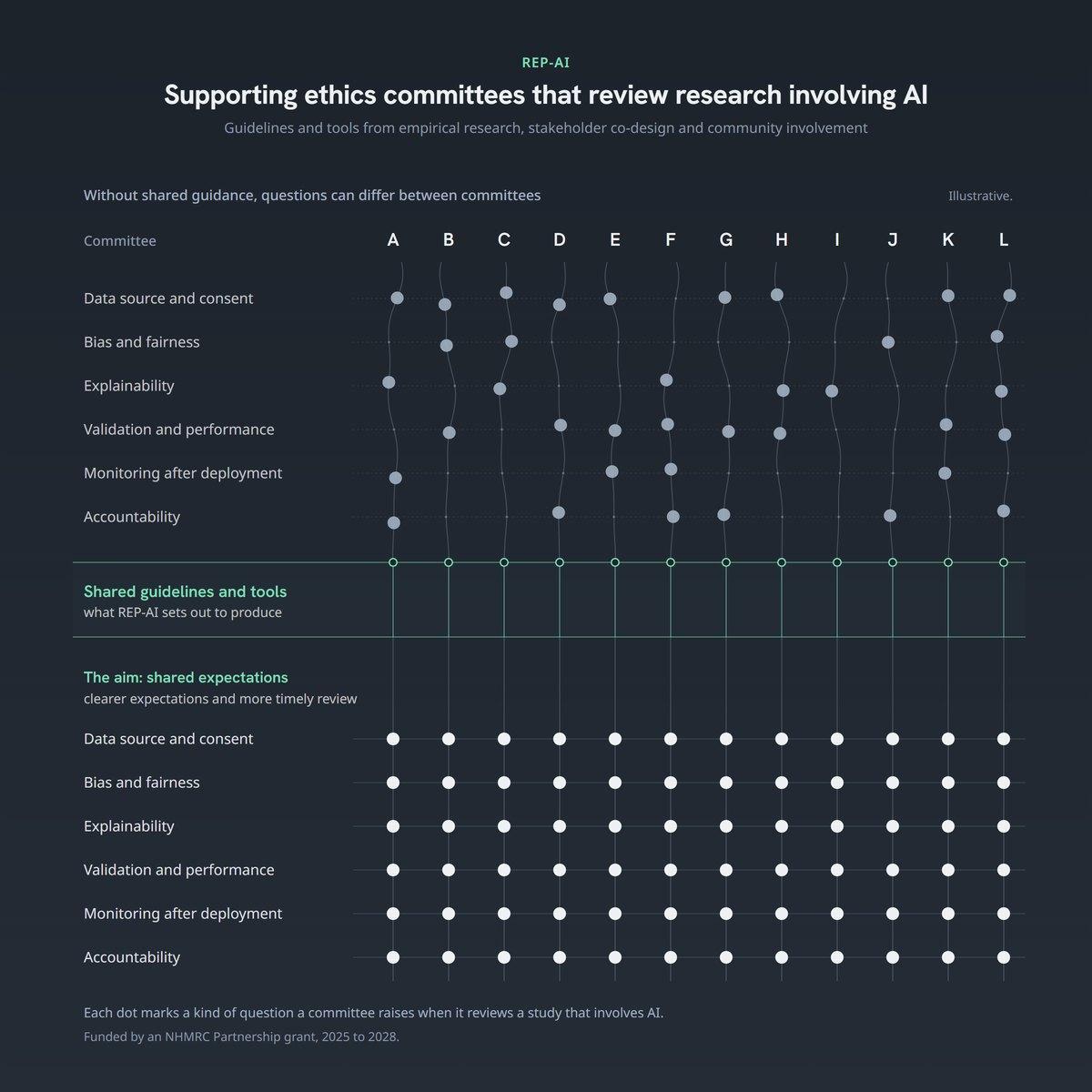
Ethics review of research that involves AI
Human Research Ethics Committees are increasingly asked to review research that involves AI. REP-AI, an NHMRC Partnership project ($2.25 million, 2025–2028) led by Prof Stacy Carter at the University of Wollongong, is developing guidelines and tools to support them, with the aim of clearer expectations and more timely review.
Dr Aksoy is a chief investigator.
Find a tool or program
An interactive map of the lab’s tools and research programs and how they relate. Filter by clinical field or by type of evidence, or select an item to read its record.
Research questions
Six of the lab’s nine current research questions, each with what is already known and what the study tests.
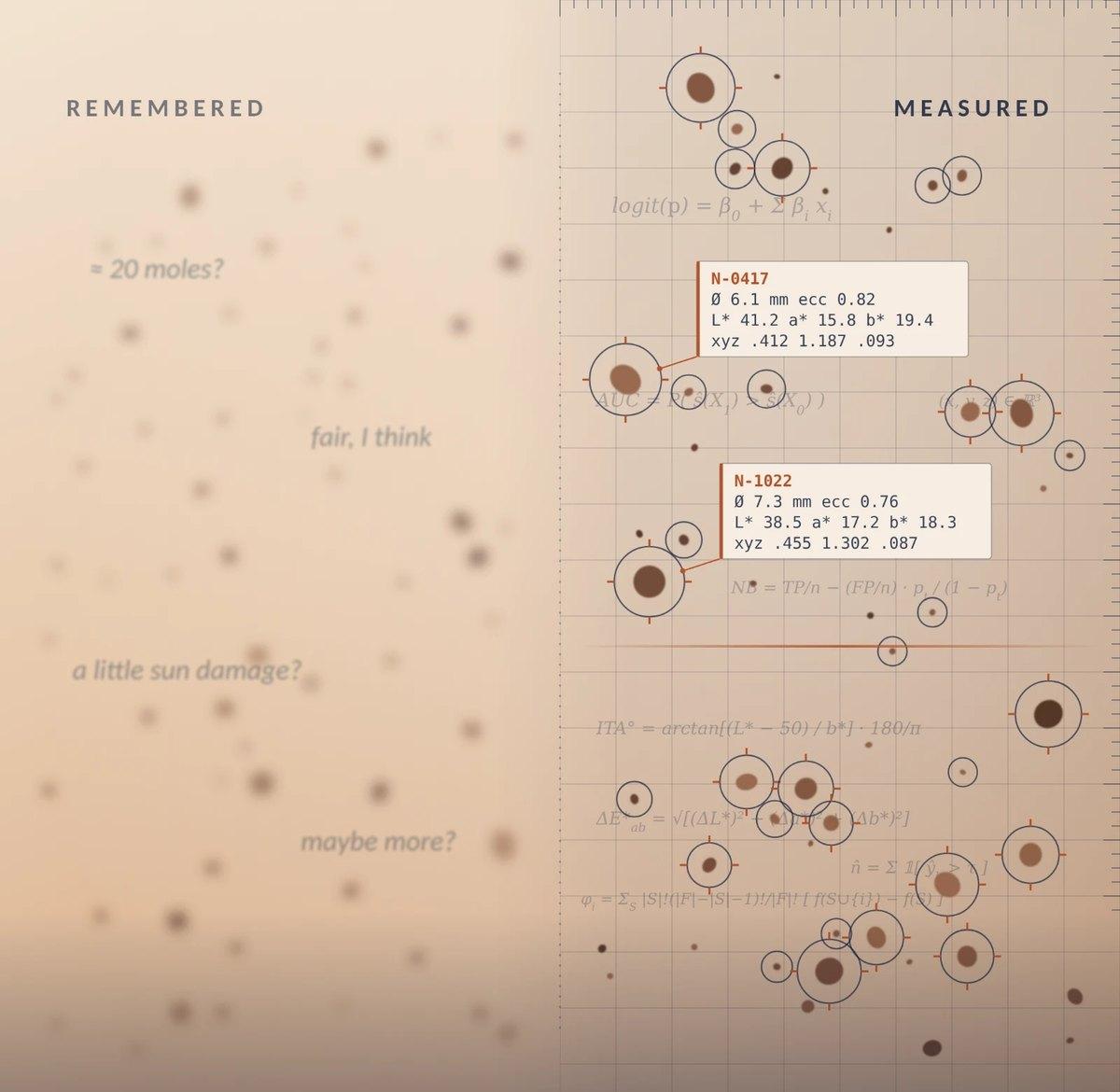
Can objective skin measurements improve melanoma risk prediction?Dermatology, Funded · Viertel Clinical Investigator Award
What is known
Australian melanoma risk models rely on self-reported traits such as mole counts, freckling, sun damage and skin colour. In external validation their accuracy is modest, and adding polygenic risk scores has improved it only slightly.
What the study tests
The study measures the same traits objectively from 3D total-body photography and tests whether this improves calibration and clinical net benefit. If it does not, the limit is more likely to be biological than a problem of measurement, which would direct future work toward molecular, environmental and longitudinal predictors.
Which groups in NSW are diagnosed with melanoma at a later stage?Dermatology, Protocol complete · data access underway
What is known
Stage and thickness at diagnosis are the main determinants of melanoma outcome. Less is known about how they vary by country of birth, language, remoteness and income across a whole population.
What the study tests
The study links more than 120,000 NSW melanoma diagnoses since 1994 with Census, Medicare, pharmaceutical, hospital and death records. It describes variation in stage at diagnosis and distinguishes model error that recalibration can address from inequities that require changes to services or policy.
How much ultraviolet radiation reaches the eye, and where?Ophthalmology, Screening complete · manuscripts in preparation
What is known
The UV Index describes ambient radiation rather than exposure at the eye. The cornea absorbs most UVB, the lens transmits more ultraviolet light in childhood than in later life, and facial anatomy and gaze direction concentrate light on particular regions of the eye.
What the study tests
Whether sun damage to the periocular skin corresponds to ultraviolet damage in the eye, how much exposure hats and sunglasses prevent in practice, and what the optics of the eye imply for eye diseases that have been linked to sunlight.
Can blood biomarkers classify macular degeneration by mechanism?Ophthalmology, Collaboration · ethics under review
What is known
Dry age-related macular degeneration is now the leading cause of vision loss in the disease and remains largely untreatable. Blood markers of mitochondrial stress have been reported, mainly in the neovascular form.
What the study tests
The study aims to replicate a published blood signature of mitochondrial stress, extend it to dry AMD, and combine proteomics, lipidomics and genetics in the same individuals to classify patients by disease mechanism.
Can routinely reported pathology improve cancer prognosis?Pathology & oncology, Three peer-reviewed models
What is known
Pathology reports contain prognostic information, including tumour grade, necrosis, depth of invasion and immunohistochemistry, much of which is not used in staging-based prognosis.
What the study tests
Prognostic models built from routinely reported pathology features, with interpretable outputs, and tested in patients from other centres. Published models cover mesothelioma, medullary thyroid carcinoma and malignant colorectal polyps.
How should clinical AI report uncertainty?Health systems, Applied across the lab’s tools
What is known
Most clinical prediction studies report discrimination, such as the AUC. Fewer report calibration, and few models are monitored after they are introduced into care.
What the study tests
Methods for reporting calibration and uncertainty with individual predictions, including conformal and Venn-ABERS approaches, decision-curve analysis, fairness audits and monitoring for drift after deployment.
People
The lab is led by Dr Yagiz Aksoy. Honours, PhD and postdoctoral projects are supervised through the University of Sydney.

Dr Yagiz AksoyMD PhD
Clinician scientist. Head, Aksoy Laboratory for Clinical & Translational AI
Dr Yagiz Aksoy is a clinician scientist. He heads the Aksoy Laboratory for Clinical & Translational AI at the Centenary Institute’s Centre for Biomedical AI, and is a Senior Research Fellow in the Melanoma and Skin Cancer group at the Daffodil Centre, University of Sydney. He practises as an honorary dermatology registrar at Prince of Wales Hospital.
His career spans laboratory research, health-system governance and clinical medicine. He completed a PhD at Macquarie University on light-activated gene delivery and CRISPR. From 2018 to 2024 he held senior policy roles at the NSW Ministry of Health, working across the state’s research ethics, governance and clinical-trials portfolio, with advisory roles continuing to 2026. He trained in medicine at the University of Sydney, worked as a doctor at Royal North Shore Hospital, and now practises in dermatology.
His publications span gene delivery, neuroscience, pathology and clinical AI: more than 20 papers, cited more than 1,400 times according to Google Scholar (September 2026; h-index 11). Research grants to date total more than $4M, including the NHMRC REP-AI partnership ($2.25M).
ORCIDGoogle ScholarDaffodil Centre profileFull profile and team
Current roles
- Head, Aksoy Laboratory for Clinical & Translational AICentenary Institute, Centre for Biomedical AI
Since Jul 2026 - Senior Research Fellow (Senior Lecturer, Level C)The Daffodil Centre, University of Sydney, Melanoma & Skin Cancer
Since Feb 2026 - Honorary Dermatology RegistrarPrince of Wales Hospital
Since Mar 2026
Selected honours
- 2026 Viertel Clinical Investigator Award (AUTOMATE ME)
- 2024 RANZCP Australian Essay Competition, first place
- 2023 KCT Rawle Prize for best performance in clinical surgery, University of Sydney MD
- 2014 BIOMOD Grand Prize and Gold Medal, Harvard
Teaching
- Academic coach with the Indigenous Tutorial Assistance Scheme since 2011, mentoring Aboriginal medical and science students.
- Clinical tutor for University of Sydney medical students; iGEM international judge (2020, 2021, 2023).
Selected papers
Clinical prediction models and research governance. Titles are given as published.
- 2026
Aksoy YA, Lee S, Moreno-Bonilla G. medRxiv (preprint). First author.
- 2025
Development of a novel malignant colorectal polyp prognostic nomogram
Aksoy YA*, Zammit A*, et al. ANZ Journal of Surgery, 2025;95(6):1190–1197. Joint first author.
- 2024
Novel prognostic nomogram for recurrence-free survival in medullary thyroid carcinoma
Aksoy YA, et al. Histopathology, 2024;84:947–959. First author.
- 2024
Crosby SP, Huang L, et al. Research Square (preprint), Posted 22 May 2024. Co-author.
- 2023
A novel prognostic nomogram for survival in diffuse pleural mesothelioma
Aksoy YA, et al. Pathology, 2023;55(4):449–455. First author.
- 2022
Fuchs TL, et al. American Journal of Surgical Pathology, 2022;46(6):774–785. Co-author.
Funding
Current grants and awards supporting the lab’s work.
NHMRC Partnership Project
$2.25M
REP-AI, 2025–2028
A national framework for the ethical review of health AI research, led by Prof Stacy Carter. Dr Aksoy is a chief investigator.
Australia’s Economic Accelerator
Ignite, 2026
Development of the lab’s peer-reviewed prognostic models into a clinical decision-support platform for hospital use.
Viertel Clinical Investigator Award
AUTOMATE ME, 2026
AI-enhanced melanoma risk stratification within the AUTOMATE ME screening trial, testing whether measurements from 3D total-body photography improve on self-reported risk factors.
Spin-out companies
Dr Aksoy founded or co-founded three companies. Tools hosted or built by them carry a disclosure line on their records.
EosGene Therapeutics
Gene and drug delivery, founded 2022
Light- and X-ray-activated lipid nanoparticles that release gene-editing or drug cargo at a chosen time and place. Co-founded with Prof Ewa Goldys and A/Prof Wei Deng.
- Two patent families granted, including in the US, Europe and Australia; a third filed
- Platform first reported in ACS Applied Materials & Interfaces (2020)
- Pre-clinical
PanaceAI
Clinical AI, founded 2025
Builds and hosts clinical AI tools, including the lab’s public prognostic calculators, research-intelligence systems such as RAMS, developed for NSW Health, and SafeBidan for midwives in Indonesia.
- Hosts the lab’s public calculators
- Consulting in clinical AI evaluation, validation and governance
Acuity Intelligence
Ophthalmic AI
Clinical decision support for eye care, co-founded with ophthalmologists Dr Shanel Sharma and Dr Loreto Rose. Its first platform, MyopiAI, supports decisions in childhood myopia.
- MyopiAI: live demonstrator, ethics application prepared
Working with the lab
The lab works with funders, health services, industry and students. Enquiries go to Dr Aksoy at the Centenary Institute or the University of Sydney.
Funders and philanthropy
Research funding
Programs are designed around specific clinical decisions, with external validation and implementation planned from the outset. The lab welcomes discussion with funders and philanthropic partners.
Enquire about fundingHealth services
Clinical collaboration
Services that hold relevant clinical data and face a recurring decision can work with the lab to develop, validate and evaluate a tool, under the service’s own clinical and data governance.
Discuss a collaborationIndustry and consulting
Partnerships and consulting
The lab works with industry on the validation and translation of clinical AI, including through its spin-out companies. Consulting on clinical AI evaluation, validation study design and research governance is available through PanaceAI.
Discuss a partnershipStudents and fellows
Research training
Honours, PhD and postdoctoral projects in clinical AI, prediction modelling and implementation research, supervised through the University of Sydney.
Study with the labSend a message
Write to Dr Aksoy here, or email him directly.
Not sure where your question fits? The lab’s assistant answers questions about anything on this site.